

Alexander Grabovetskiy, woodcarver, School of Woodcarving · Published 2020
Are diamond discs worth it for sharpening carving tools?
Quick answer: Diamond discs for sharpening are thin, six inch discs coated with diamond grit that sit on top of a Work Sharp wheel or lie taped to a board for hand work. I liked three things about mine: they fit my machine, they work as a normal stone by hand, and they cost about what sandpaper did.
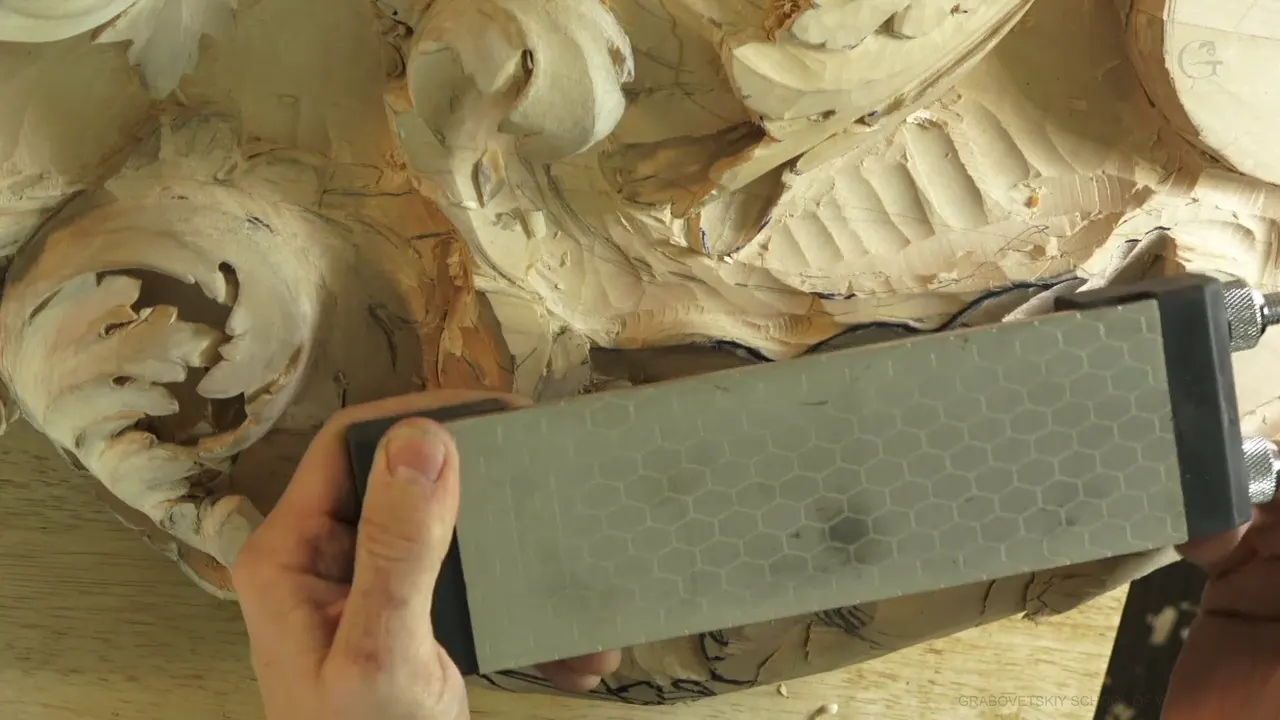
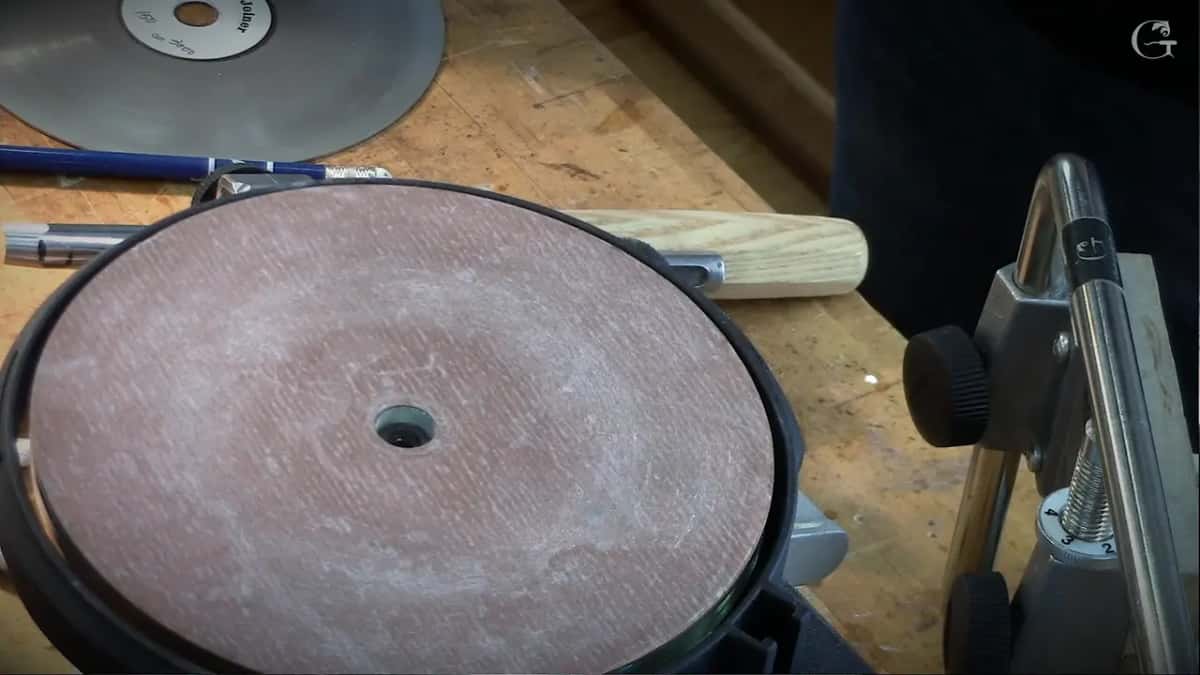
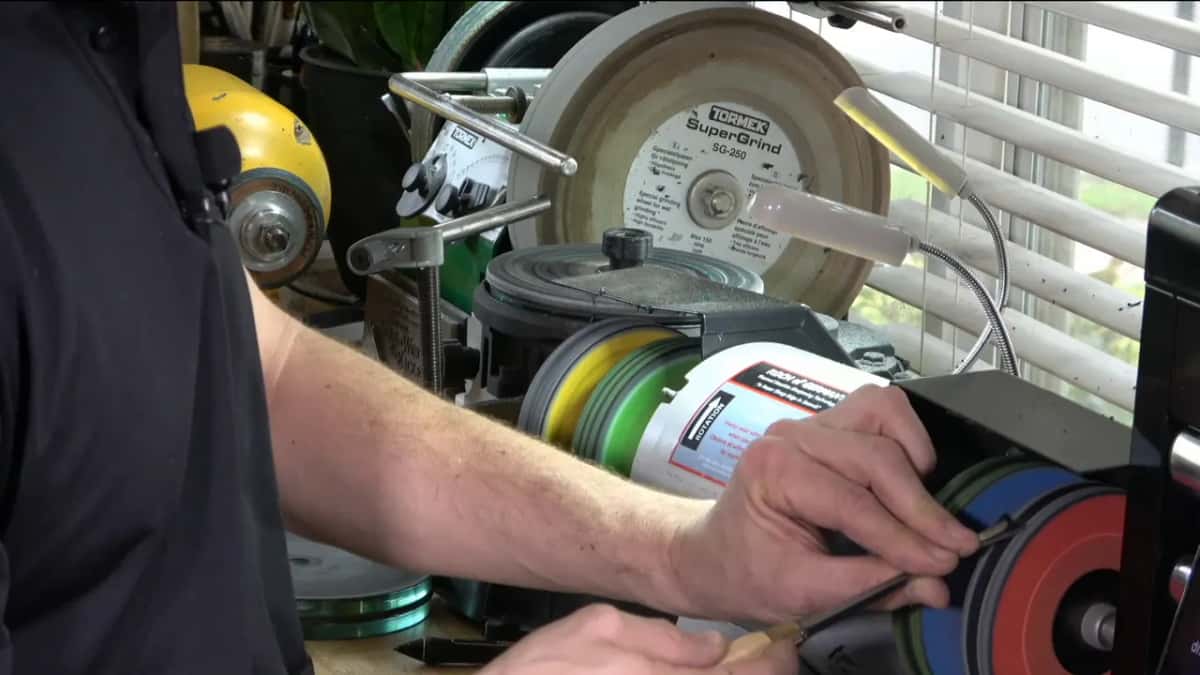
A diamond disc is a thin steel disc with tiny diamond stones bound to it, 6 inches (150 mm) across with a 10 millimeter (3/8 in) hole in the middle. I run mine on my Work Sharp 3000, the machine I use every day. And with a bit of tape the same disc lies flat on a board, and you sharpen on it by hand like on a stone.
Do you sharpen your own carving tools? And would you like a hard, flat abrasive that does not cost much? Then here is what a student of mine showed me. That student sent me an email and introduced me to a really cool product. You will see the three things I like about them, the grits I bought, and how to use one with no machine at all.

Diamond discs in six short lines
- The discs match the wheels on my machine in size and hole, so they fit perfectly.
- As the hardest stone on the market, diamond gets the job done quickly.
- Glued to plywood with double-sided tape, the disc works as a hand stone.
- My grits run 60 up to 3,000.
- One disc cost me $12.99 when I filmed the lesson, about what sandpaper cost, and they go to 3,000 where I said CBN wheels stop at 1,000.
- Sandpaper gets the same result, so diamond is still not a must.
Why did I like the diamond discs so much?
I started to say I like two things about them. Well, actually more than two, three things. First, the discs fit my machine perfectly. They are diamond, which is the hardest stone, so they just get the job done quickly, and I can use one as a normal stone by hand. And third, what I love about it, the price.
When I filmed this lesson, one disc cost $12.99. We are talking about thirteen dollars for one disc, and I called it absolutely cheap. Pretty much the price of sandpaper, but it is diamond we are talking about.
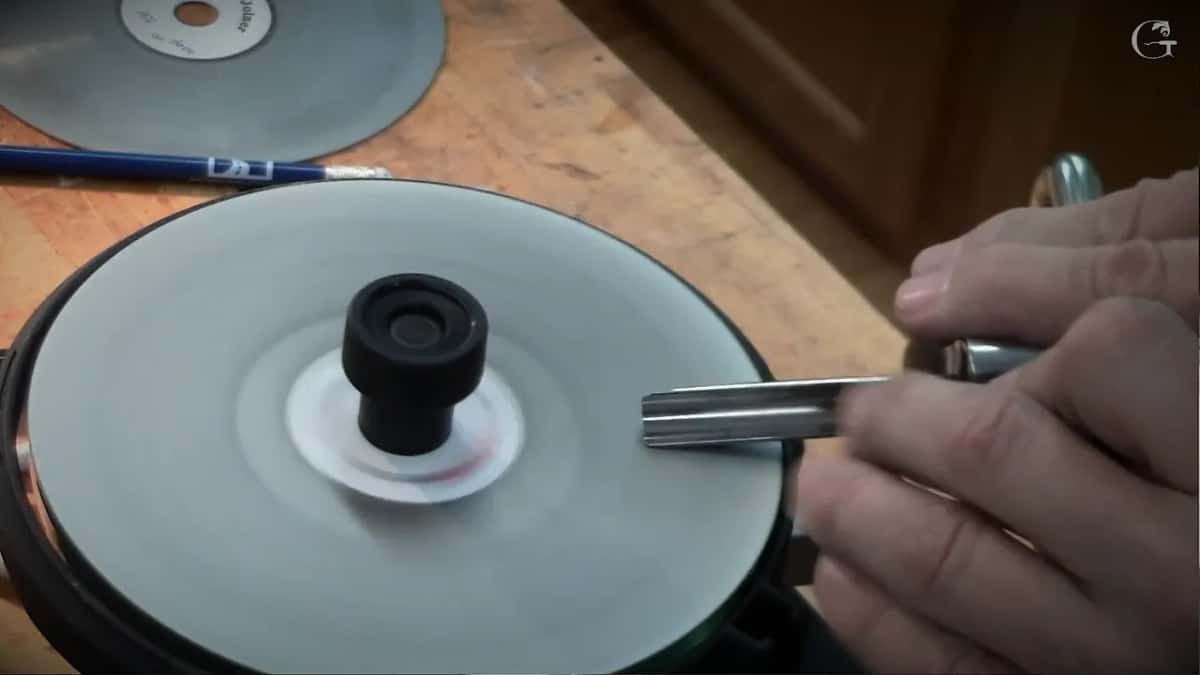
I only found them the year I made this lesson. I'm not 100% sure what is on the market, and I said so. But I am always listening to my students, and that is how these came to me. The brand on mine is Joiner, and it is a China made product. Chinese, yes. I said in the Maine Coast class that I have no problem with that, because they are cheap. During the October livestream I said one more thing, that I don't know why I didn't know about them before.
Will a diamond disc fit a Work Sharp?
Mine fit just perfectly. The discs are 6 inches, 150 millimeters, and the hole is 10 millimeters, exactly what the Work Sharp wheels take. As you know, I really like my Work Sharp setup. The 3000 is my workhorse, the one I use every day.
Those discs are tiny in thickness, though. Maybe less than a sixteenth of an inch (under 1.6 mm), I would guess. So I lay each one on top of another wheel as a support, and it sits right on top of it. Then I can use it like a normal sandpaper wheel, or like the CBN wheels.
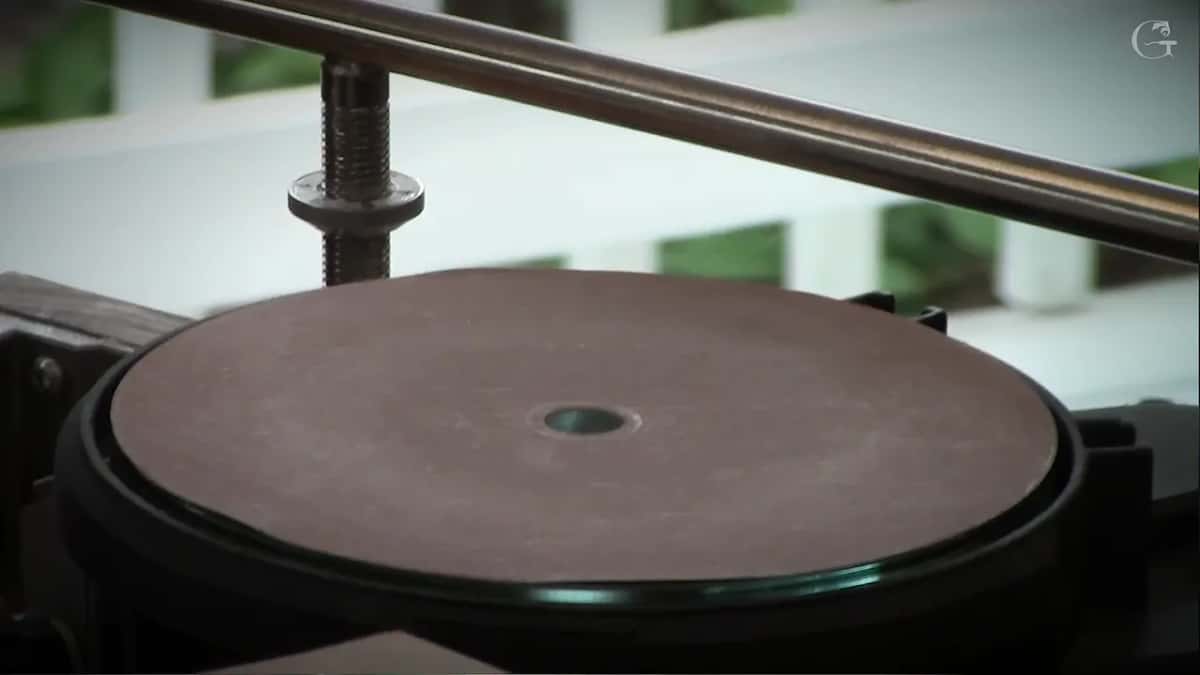
On a livestream in October 2020, someone in the chat had bought a Work Sharp for a birthday. So I pulled these discs out and showed them. There are a couple of ways to run that machine, I told the chat. One is normal sandpaper, like I used for many years. Another is the really expensive CBN wheels, where you can spend a lot of money. And now there is a lot cheaper solution on the market. That talk is in the October 2020 livestream. The bar and jig that hold my tools on that machine have their own lesson, the L-bracket.
How do diamond discs compare with CBN wheels?
I kind of like the CBN wheels. I like the idea of CBN, and I told you about them before. In case you never met them, CBN is the second hardest stone, pretty much. Those discs are really good. Really good. On another livestream I called a CBN wheel an alternative to sandpaper, and one I really like.
But diamond is harder, the hardest stone you can find on the market. The cubic form of boron nitride, which is what CBN stands for, was first made in 1957, Wikipedia says.

And one more thing caught my eye, because even CBN wheels go only to 1,000 grit. These diamond discs go all the way to 3,000. At the Maine Coast class I put a number on the CBN side too. A wheel was about $300 then, and I told the group it was not worth it. I do have them. Diamond does the job.
Can you use a diamond disc by hand?
Yes, and that is one of the three things I like. The disc can go on any surface, even if you do not have a Work Sharp machine at all. If you like to sharpen by hand, you still can. It has to be a non-slip surface, of course. Put double-sided tape on the back side and stick it to some kind of plywood, or whatever surface you prefer. Get several of them and use them just like a stone.
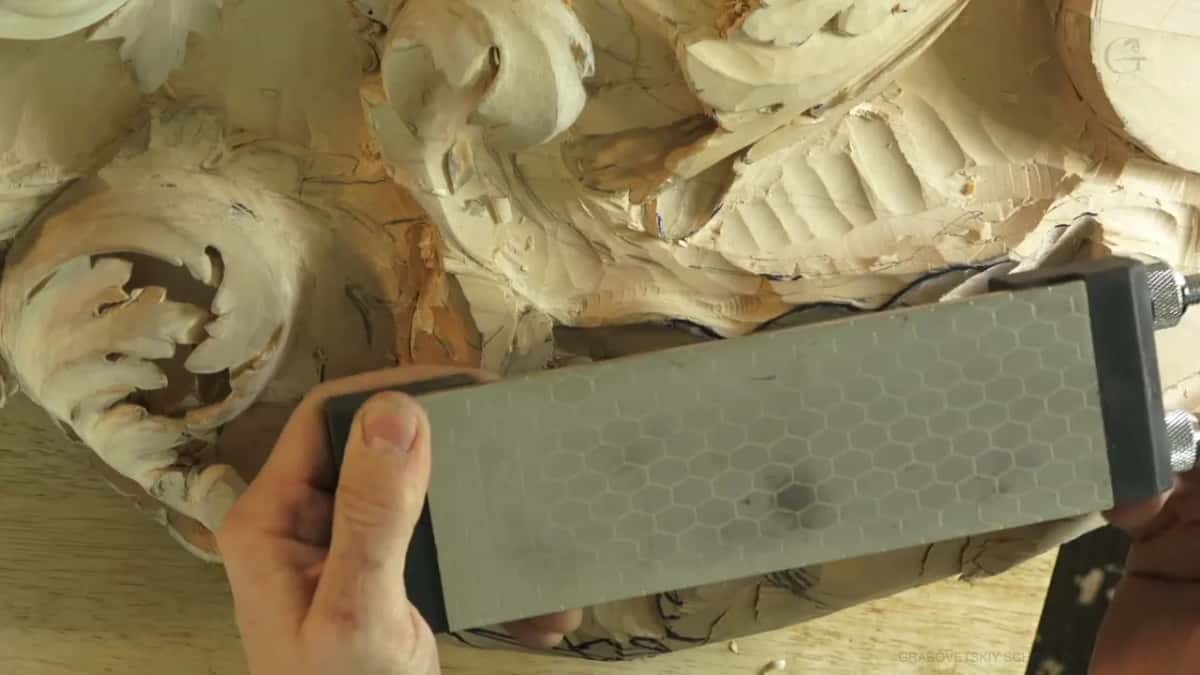
Why bother? A normal diamond bench stone costs a lot. Some of them give you only one grit. The one I had in mind gave two grits, and it was still pricey. My words on the livestream were plain. You can't buy stones that cheap.
Over in the micro tools lesson I showed a double sided diamond stone that Schaaf sent me as a gift, 1,000 grit on one side and 400 on the other. I called it the cheapest semi professional answer I knew of, and I said maybe there is something cheaper.

Which grits did I buy?
I bought several for myself. A 60 grit, then 100, 180, 320, 600 and 1,000, and it goes all the way to 3,000 grit. That is just amazing to me. I like it, I like it, I said.
On the October livestream I listed a 3,000, a 1,000, a 600, a 320 and a 180. 160 and 80 are out there too, as you wish.
| Abrasive | What I said about it on camera | Where |
|---|---|---|
| Cheap diamond disc | Fits the Work Sharp, goes to 3,000. | This lesson |
| CBN wheel, 1,000 | Really good, and I said 1,000 tops. | This lesson |
| Plain sandpaper wheels | Long life, cheap, and the same result. | Maine class |
| Glass wheel, 3,600/6,000 | The finest wheel I brought to Maine. | Maine class |
| Homemade MDF wheels | Cheap to make, and they save money. | Huge tools |
Why so many grits? At the Maine class I said the Tormek gives you only two, and if you want to take your tool to perfection, you do not want to see those tool marks. You really need more grits. In Maine the only glass wheel I had with me was a 3,600 and 6,000 wheel, the finest I brought, along with my leather and a felt wheel.
In the same class I took a tool to 1,000, with no water and no oil. I had a 3,000 diamond too. I could have taken it to the extreme, to 6,000, but I did not. I jumped right away to the leather and the felt.
How long do cheap diamond discs last?
That question came from someone in the Maine class, and my answer was that they last a long time. They probably don't last as long as they used to, because of the way they glue stuff on. It is still Chinese. But it lasts long. And so far I really have not had to replace mine.

On the livestream I was honest about what I didn't know. I don't know the quality of it, I said, but I had tried it a couple of days before, and it worked absolutely fine. What they use for binding those micro stones to the steel, I couldn't tell you either. Even if they did not use really good glue, the price was pretty much the price of sandpaper. And it is diamond, so it gets the job done really quickly.
I put a link in the material tab of this lesson, and the things I use and like sit on my Amazon store page. Some stores are in Europe and one is in the US. There is no money in it for me.
Why do I care so much about a flat surface?
The bevel is the reason. When I sharpen on a stone, it gives me an absolutely flat bevel, and the point is not as weak. A round grinding wheel makes a curve in the bevel instead. Tormek does it. Other grinders do it too, it does not matter how expensive.
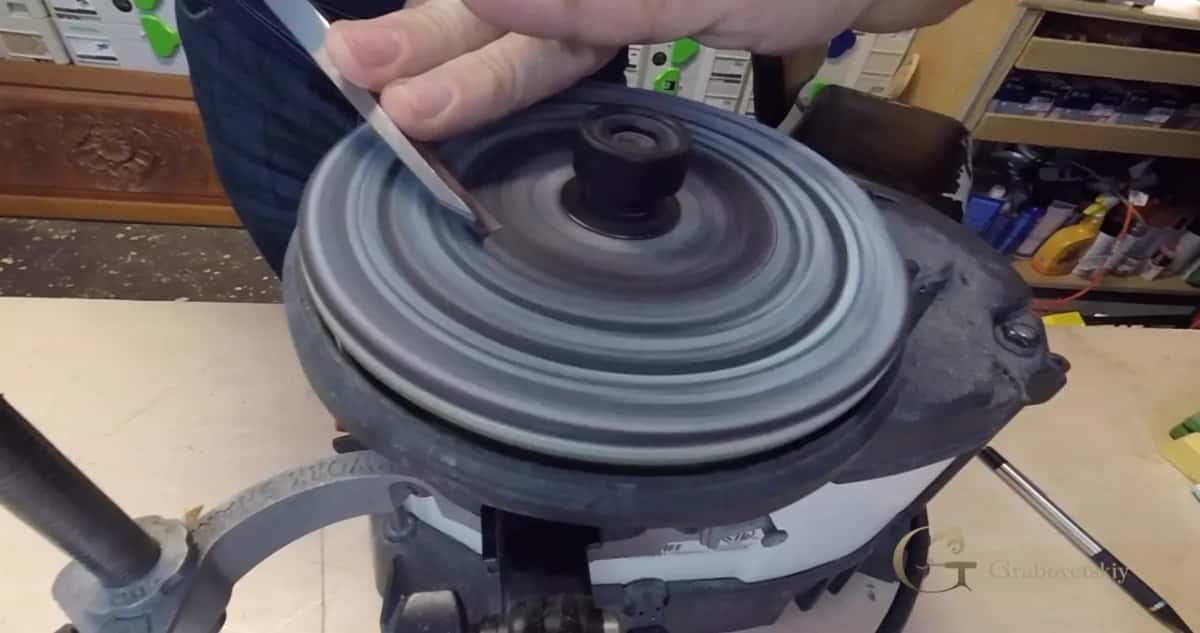
If the bevel is really high, like on a turning tool, that is no problem at all. Mine are long. Some are about 10 millimeters, 14 on some tools, and some up to 25 millimeters, like one inch, as I said in the micro tools lesson. With a bevel that long the point becomes really weak. To the Maine group I spoke of bevels up to five-eighths of an inch, 18 millimeters, and said that on 18 millimeters it makes a big difference.
I love Tormek. I have Tormek. I don't use the water part anymore, I've got diamond stone on that. But by hand, on any stone, water or oil or diamond, it just takes so long to make a long bevel. So the question I had to answer was simple. How can I get the same result as on a stone? All I need is a flat surface to make the flat bevel, and do it on steroids. Fast. A flat wheel on that machine does it, flat like a stone.
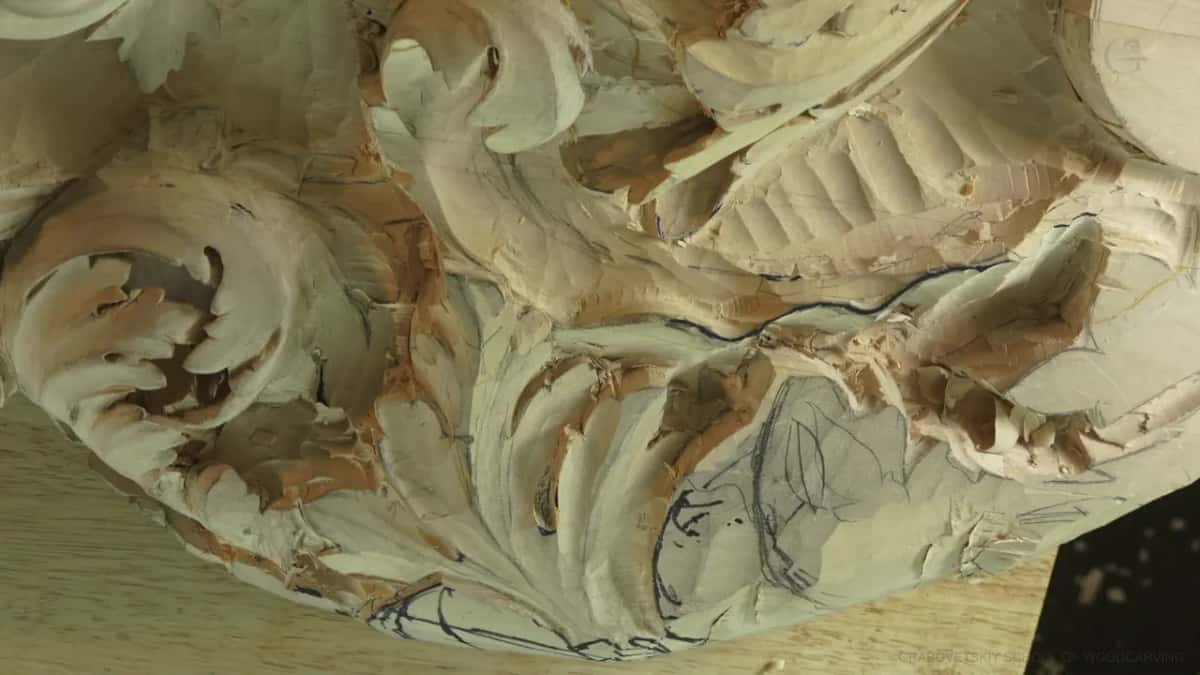
That machine has more going for it, and I listed it for the Maine group. It is slow enough that it never overheats my tool, and it is safe, you can touch the wheel and not hurt yourself. Changing the grit takes one second. Boom, and there is the next sandpaper. A tool can go from 80 grit up through 6,000 in a matter of minutes, and I can sharpen the whole tool in two minutes.
Do you have to buy diamond at all?
No, and I said it straight out in Maine, that you don't have to buy diamond. Sandpaper lasts a long time, really long, and it is cheap also. You get the same result. My 6,000 grit sandpaper went five years before I changed it.

There is a cheaper way still. Cut 10 millimeter (3/8 in) MDF stock, scroll it out, and you have several wheels of your own. Go to Home Depot or Lowe's, buy six inch sandpaper, and you are going to save a lot of money. That came up in Maine too, in the part on huge tools.
And here is the far end of it. The stropping lesson has a story about a grape carving. I pretended I did not have the money for stones, which could be really expensive, I said, some $200 a stone for just one grit. I had a piece of leather, and I used only stropping on those tools, and I was able to carve.

What comes after the last disc?
Leather, and then felt. I strop on the leather and I do honing on the felt. At that class I didn't even use the jig for that part. I didn't need it.
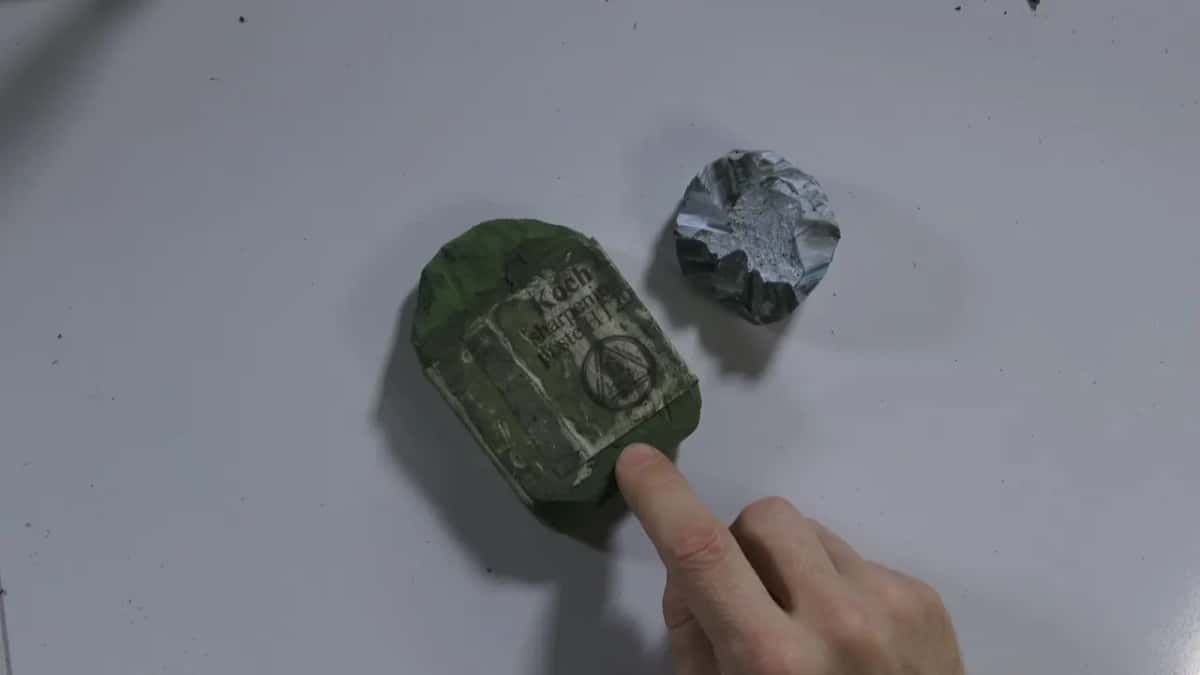
Honing needs very little pressure from me. You don't have to press. The diamond paste takes care of the scratches and the marks. The felt wheel turns black, you can see it, and that means metal is coming out.

My favorite pastes are the Koch brand. One is green, a little more aggressive, and the other is a fine diamond paste. They are not cheap, but they last forever. Another favorite of mine comes from Ukraine, from BeaverCraft. The red wheel I charge with the blue, a really fine diamond paste, and it gives me a super sharp edge. Super sharp.
Where the rest of the sharpening lives
One short lesson covers the discs, on one machine. The Carving Tool Sharpening course takes the tools one by one: the straight gouge, the V-tool, the back bent, the fingernail gouge and the spoon gouge. Leather and paste get their own strop lesson. With Access you get every one of them.
How it's done
- Pick a few grits. Several grits, 60 through 3,000, is what I got for myself.
- Tape the back. Double-sided tape goes on the back side of each disc.
- Stick it to a board. Plywood works, or whatever flat surface you prefer. The surface under it has to be one that will not slip on the bench, of course.
- Use it at the bench. Get several of them and use them by hand, just like a normal stone.
- Or put it on the machine. The machine takes it too, though the disc is so thin that another wheel goes under it as a support. It sits right on it.
Frequently asked questions
Do diamond discs fit a Work Sharp machine?
Mine fit perfectly. Each disc measures six inches across, the hole 10 millimeters, the same as the wheels on my machine, but very thin, so I set it over another wheel for support. From there I run it the way I would a sandpaper wheel or one of the CBN wheels on that machine.
Is a CBN wheel better than a diamond disc?
CBN wheels are really good, and I own some. But CBN is the second hardest stone and diamond the hardest, so diamond does the job for me. In this lesson I said CBN wheels go only to 1,000, while the cheap diamond discs I bought go as high as 3,000.
Can I sharpen by hand on a diamond disc?
Yes, by hand alone. I put double-sided tape on the back and stick the disc to plywood or another board, on a surface that will not slip. Get a few grits and you have hand stones, and you can't find stones that cheap.
What to carve next